

The Doubanjiang Guide
Introducing the most important condiment in my Sichuanese pantry

If a mapo tofu recipe includes a substitution for doubanjiang telling you to just use sambal or gochujang it’s time to put that recipe away. That’s like asking someone to make miso soup without using miso—it’s just not the same.
Doubanjiang is a condiment foundational to an entire cuisine; it’s understandably a confusing ingredient given limited English resources on the subject. I wanted to remedy this by sharing as much information as possible for both the doubanjiang beginner and the enthusiast.
This full ingredient guide was too long to fit within the email length limit, so let’s call this part 1. If you’re reading on Gmail this post might get truncated, so do click on "View entire message".
Today I’ll answer the following:
What is doubanjiang?
How is doubanjiang made? (home-style, traditional production, modern industrial process)
In part 2 I’ll cover the history of doubanjiang, different ages and varieties of doubanjiang, how to source doubanjiang, and how to cook with doubanjiang next.
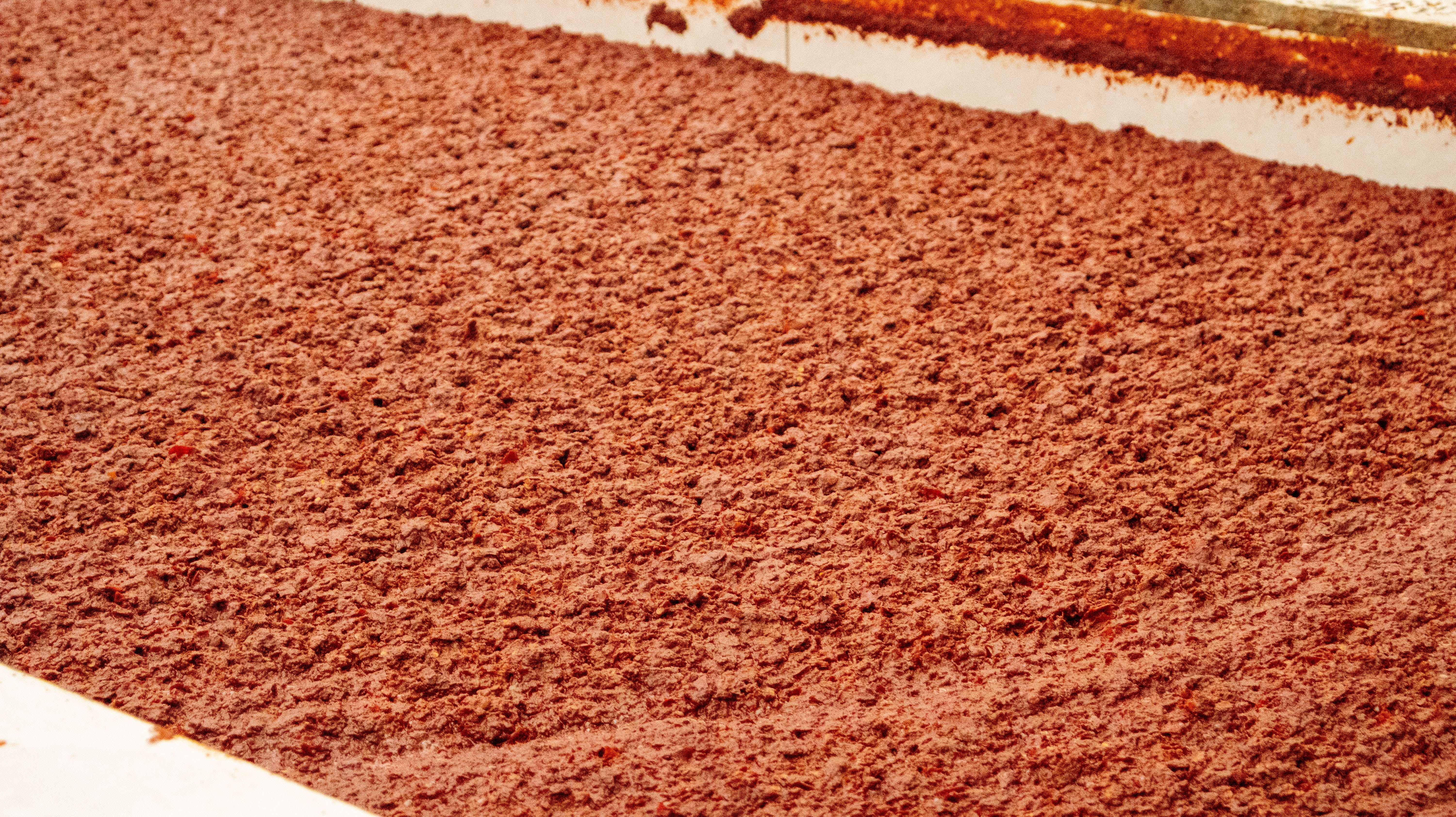
What is doubanjiang?
For those unfamiliar, doubanjiang is a Sichuanese condiment made from fermented fava beans and chilis. For those unfamiliar with Sichuan, it’s a province in Southwestern China known for its fiery flavors and flavor combinations like mala (numbing spice) and fish fragrant (sweet and savory pickled chili).

The name doubanjiang literally translates to "bean fragment paste”, a nod to the process of peeling and splitting fava beans (a.k.a. broad beans) before fermentation.
Pixian douban
In my recipes I specifically call for doubanjiang from Pixian, but what makes Pixian douban different than other doubanjiang?
Pixian is a district near Chengdu, Sichuan, and is historically the birthplace of doubanjiang. Much like how Champagne is to sparkling wine or San Marzano is to Italian tomatoes, Pixian doubanjiang has a protected geographical indication.
While Pixian isn’t the only region that produces doubanjiang, it remains the epicenter of Sichuan-style doubanjiang production. If you’re outside of Sichuan and not making your own, I consider Pixian doubanjiang the gold standard and the most widely available option.
How doubanjiang is made
For a brief overview, here’s my one-minute video overview I shared on Instagram about of how doubanjiang is commercially produced.
Last winter I went to Pixian to see the doubanjiang process firsthand at a family-owned doubanjiang factory with my friend and food writer Jess Eng (@goudatalks). The owner, Mr. Wang Huaye, picked us up from the subway station in his car and gave us a firsthand tour of his factory.
Pixian (renamed Pidu in 2016) produces the vast majority of the world’s doubanjiang. The largest company is Sichuan Pixian Douban Co., which owns the brand named JuanCheng (鹃城牌).1 Mr. Wang explained that after the Communist revolution several pre-existing companies combined into Sichuan Pixian Douban Co. and shared more standardized production methods. The family-owned factory we visited was comparatively small, producing only a few hundred tons at a time.
The moment we stepped out of the car, the air was thick with 酱香 (jiàngxiāng)—the intoxicating, deeply earthy scent of fermenting beans and chilies. It’s a complex aroma, reminiscent of miso and fried onions.
Modern doubanjiang production process
The modern day process to qualify as Pixian Douban proudly follows the traditional process—it skips no steps, everything is just bigger.
Step 1. Source ingredients
Traditional Pixian doubanjiang contains only four ingredients: fava beans, wheat flour, salt, and chilis.
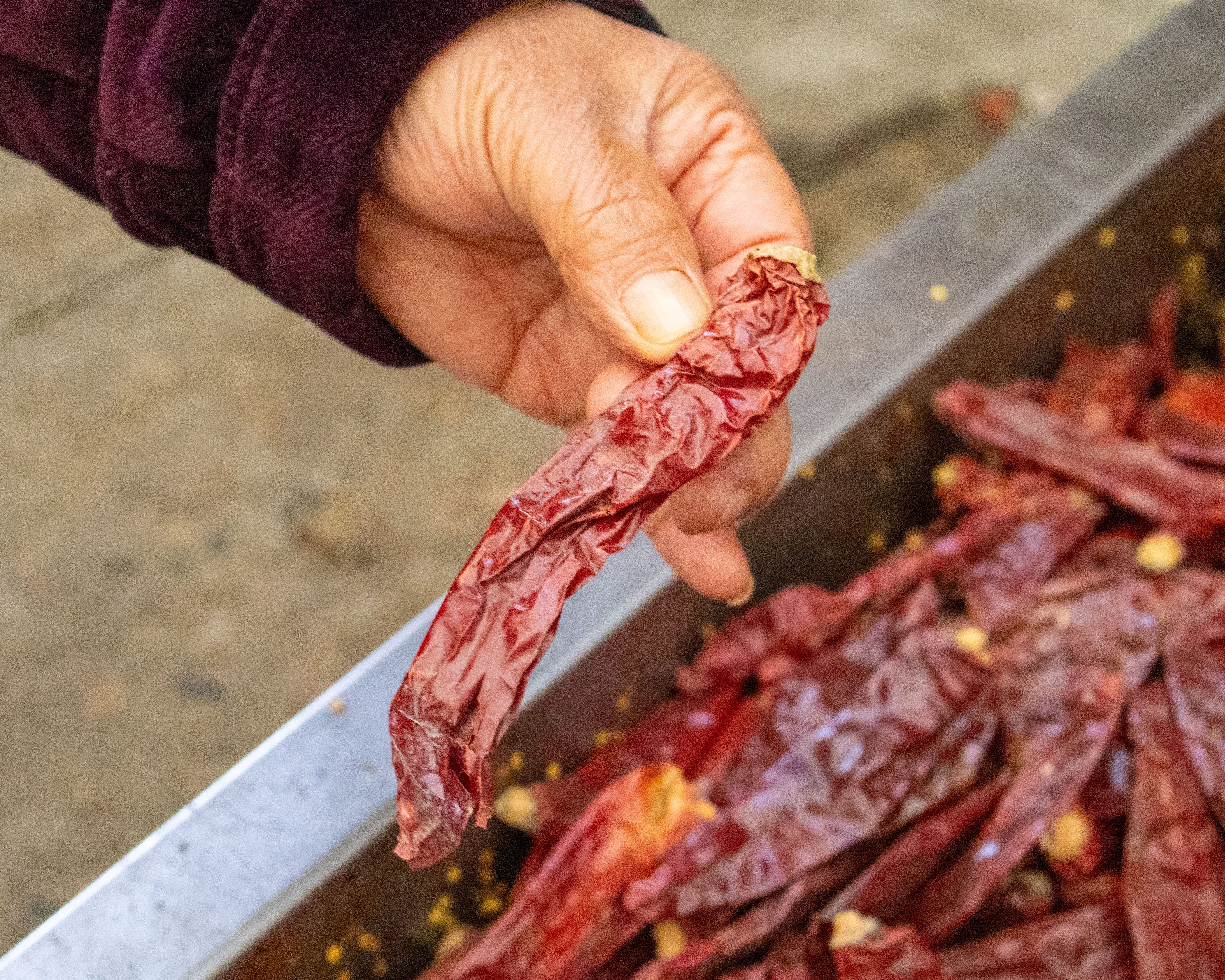
The Chilis
Most records of doubanjiang production note the use of erjingtiao chilis, a mild to medium heat pepper common in Sichuan cuisine. However, the majority of doubanjiang producers now use a combination of peppers. Starting in 2001, 美国红 (Meiguohong, translates to “America red”) chilis became the predominant type of dried chilis for doubanjiang. Meiguohong has a brighter color, more stable yield, better resilience, and is cultivated in nearby Guizhou province.
There’s even a study from 20232 detailing key differences between doubanjiang made from erjingtiao versus meiguohong chili varieties. In short, they concluded that the variety of chili used has an effect on the flavor and color of the resulting doubanjiang.
The Beans
The namesake ingredient of doubanjiang, the bean, has remained unchanged since the invention of this condiment. Doubanjiang uses 蚕豆 (cándòu) also called broad beans or fava beans, a widely cultivated crop in Sichuan. Although the Sichuan basin is known for being an agricultural region, it can no longer keep up with the demand for fava beans alone. Today, the fava beans are sourced from a combination of regions that include Gansu province to the North and Jiangsu to the East.
Wheat Flour
Why add wheat flour? It jumpstarts fermentation. Similar to how koji is grown on rice for miso, wheat flour provides carbohydrates for mold growth in doubanjiang.


The Salt
What’s the right type of salt for doubanjiang? If you ask Mr. Wang, there is only one correct answer: Zigong salt. Zigong is a city in Southeastern Sichuan, whose prosperity has been tied to its salt wells. Mr. Wang further explained that Zigong salt has the ideal combination of minerals that contribute to doubanjiang’s flavor complexity during fermentation. He also opts for Zigong salt that is relatively fine, so it disperses well for even fermentation.
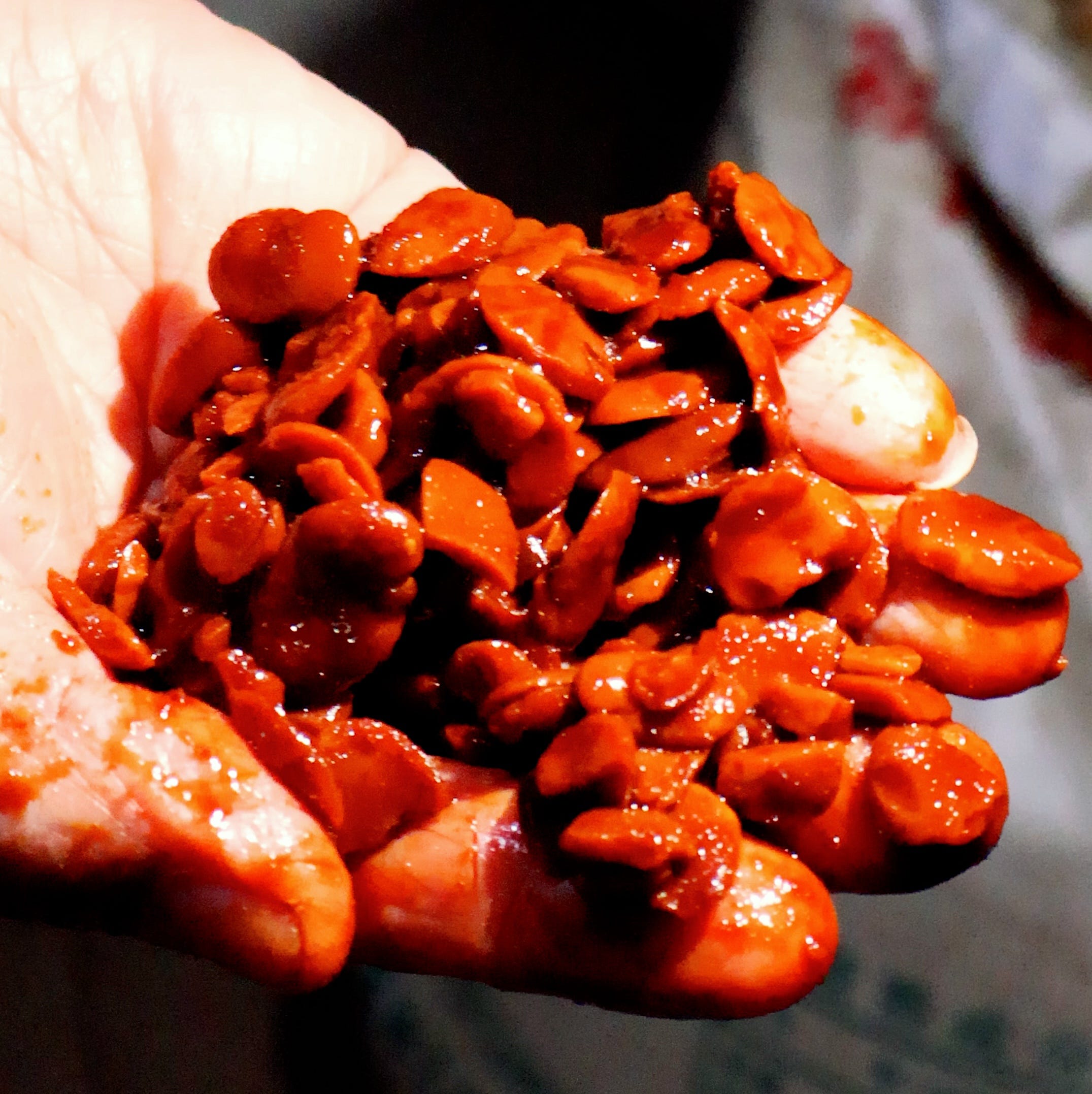
Step 2. Ferment beans
Fava beans are soaked, peeled, and split then combined with a light coating of wheat flour. They’re inoculated with a type of 曲 (qǔ), known as 黄霉 or Aspergillus oryzae or yellow koji. The mold converts available carbohydrates in the beans into kojic acid, adding complex umami flavors.
The moldy beans are then mixed with water and 25% salt for a second stage of fermentation that lasts at least 12 months.
Today, the scale of production allows these steps to be outsourced into individual processes. The factory we visited procures fermented fava beans from another fermentation master that specializes solely in this first step of the process.


Step 3. Ferment peppers
Although doubanjiang is a condiment with both beans and peppers, they each undergo a separate stage of fermentation before being combined for a final ferment. Chilis spend less time fermenting than beans, so a separate first ferment allows producers to optimally stagger the process based on seasonal availability.
Fresh chilis contains 90% water, but the ideal finished doubanjiang should have just 58% water. Today, a combination of fresh and dried peppers are used to achieve optimal fermentation. Dried and fresh chilis washed, chopped, then placed in 250 ton pools with water and salt, left to ferment for at least 6 months.
Fun fact: the spicy water from processing fresh chilis can’t be returned to the wastewater system so it’s used to hydrate dried chilis—a zero-waste solution to water pollution.
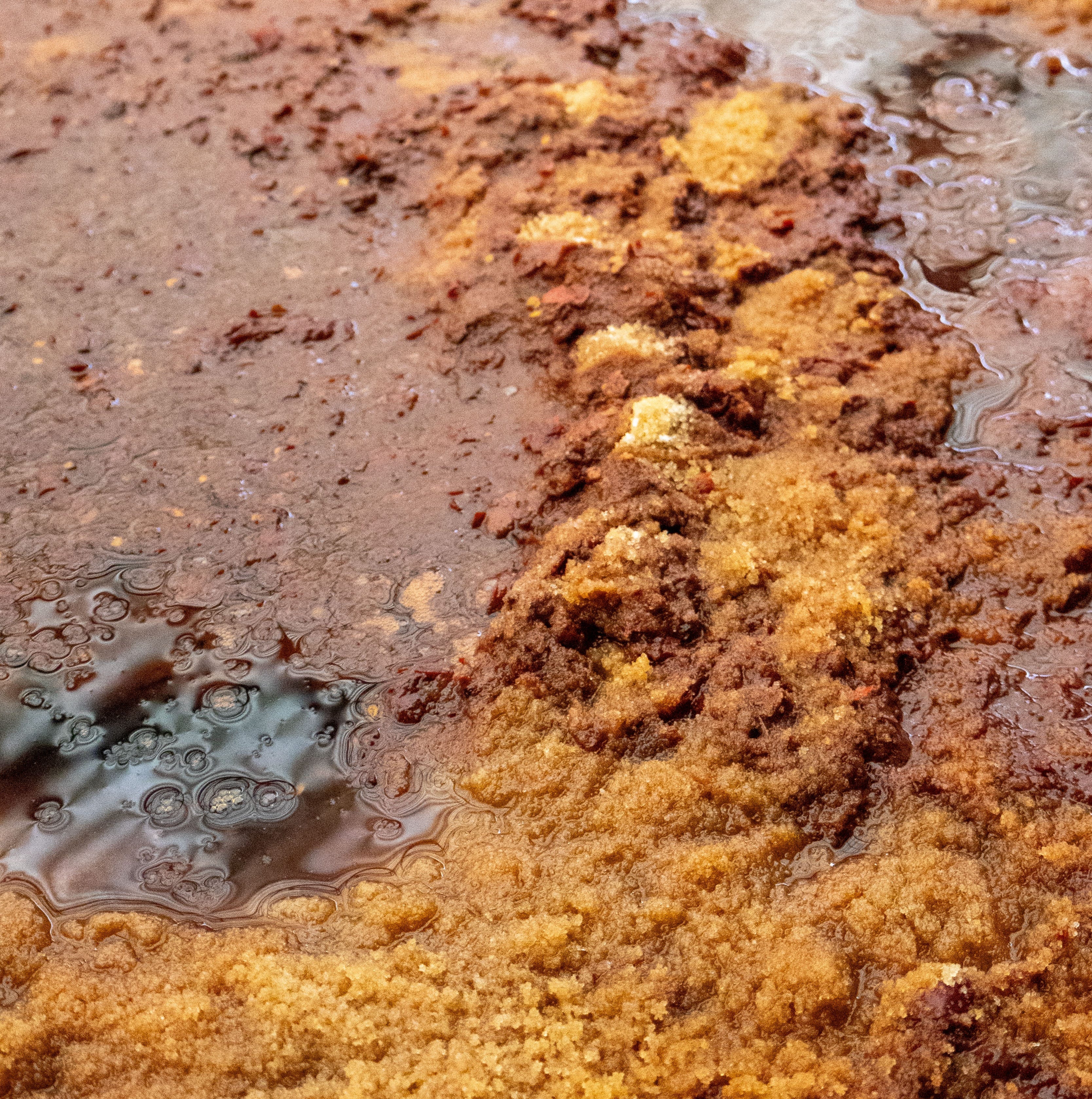
4. Mixed fermentation
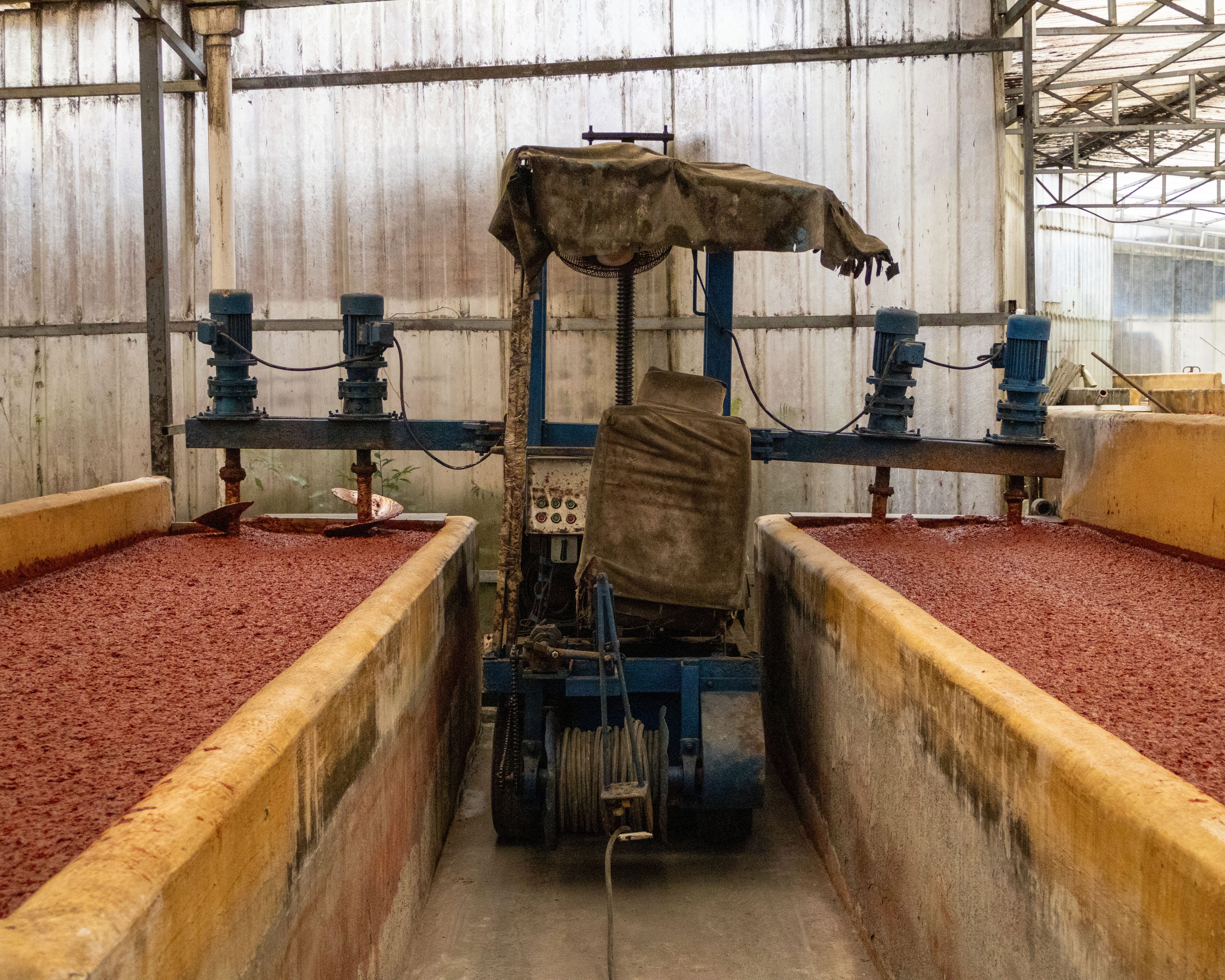
The final stage of fermentation marries the fermented beans and fermented chilis together for one final honeymoon before it’s off to grocery shelves. Beans, chilis, and additional Zigong salt are combined in above-ground troughs each holding about 10 tons of chili-bean paste (yes, that’s still enough to swim in).
This final process known as 翻晒露 (fān shài lù)— stirring, sun-drying, and air exposure—ensures even fermentation and deepens the flavor of the doubanjiang.
翻 (fān) Stirring
Traditionally, workers hand-stir the paste daily with wooden paddles, but modern facilities have scaled up the process. I curiously pointed out the tractor parked next to the pools, and Mr. Wang immediately jumped into action to give us a live demo. His son cautiously drives a tractor with rotating mixer arms on either side lowering into the rich red paste, aerating 10 tons of sauce with each pass. It’s a visceral experience to see and smell—my version of a Disneyland ride.
For a sense of scale, the volume of doubanjiang Mr. Wang’s factory currently produces would require over 100 workers solely dedicated to daily hand-stirring.
晒 (shài) Sun-drying
As mentioned earlier, the final doubanjiang aims for a hydration of 58%. Sun-drying and evaporation plays a role in getting doubanjiang to this final number over the course of 3 or more months. The facility is covered with nets to keep away bugs and a retractable translucent canopy to let in light without the risk of getting rained on.
露 (lù) Air exposure
Air exposure is just as crucial as stirring and sun-drying in developing the deep, umami-rich complexity of Pixian doubanjiang. Unlike sealed fermentation processes, doubanjiang is left open to the elements, allowing wild yeasts in the air to interact with the paste. Much like how wine or charcuterie may be influenced by native yeasts, doubanjiang made in different regions will carry different quirks and characteristics.3
The climate of Pixian is famed for being particularly well suited to doubanjiang production. Pixian has an average annual temperature of around 60°F (16°C) with high humidity.4 This prevents the paste from drying out too quickly while maintaining the necessary moisture for fermentation.
This final process takes at least 3 months in the warmer months, longer during colder months when fermentation is slower. Aged varieties of doubanjiang remain in final fermentation for as long as 5 years, becoming darker and funkier with time. Check out a video cracking into a 3-year aged doubanjiang from 小红书 user 山笋师兄.
The final product is transferred to a packaging line where it’s sealed into jars or bags, loaded into a truck for distribution. The product they were packaging the day I visited is a red oil variation of Pixian douban, which includes an extra step of capping each jar with a layer of rapeseed oil. The label features the protected Pixian douban trademark, the brand name, and Mr. Wang’s daughter in law.


Traditional process
We also stopped by the Museum of Doubanjiang in Pixian, where they focus on the traditional methods for producing doubanjiang. You’ll find full-scale dioramas depicting the steps of the process, paintings, sculptures, and an open space with hundreds of crocks of doubanjiang being fermented in the traditional method.
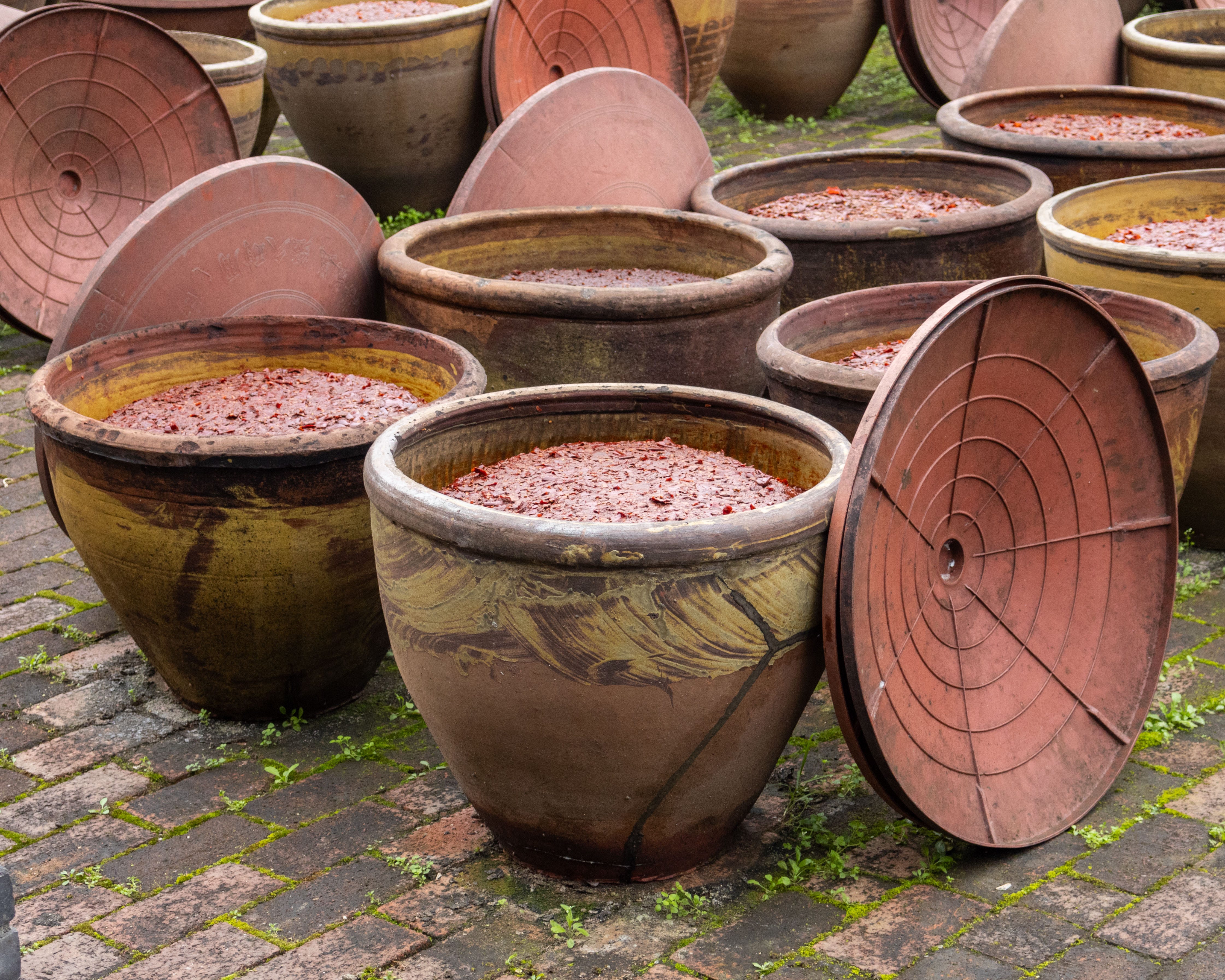
The key differences lie in mechanization. The fava beans and chilis are split and chopped by hand instead of by machine. The concrete pools are 50 liter clay crocks. Workers stir the doubanjiang with wooden paddles instead of a dedicated machine. According to Mala Market, there are only two remaining producers that have products handmade in the traditional method.5
Homemade process
My grandfather used to make his own doubanjiang at home, a labor-intensive tradition that involved the entire family. One batch had to last until the next year’s harvest, making each step of the process crucial.
It all began in late spring or early summer, when fava beans were harvested at their peak. The whole family gathered to process them—soaking, deshelling, and steaming until they were just tender enough to split in half. My mother recalls the deshelling process as a grueling one: squatting over kilos of hot fava beans, meticulously peeling them one by one for hours until her fingertips blistered. The beans are mixed with flour and either inoculated with yellow qu (koji) or wild yeasts. The microbes grow for several days to a week before salt is added for the next stage of fermentation.
Meanwhile, erjingtiao peppers came into season, marking the next stage of the process. The peppers were washed, dried, chopped, and salted to undergo their own fermentation, separate from the beans.
After several months, the fermented beans and peppers could be combined for a final ferment, though some families preferred to keep them separate, blending them only when cooking.
There’s a fantastic video from Nico Stanitzok documenting the start to finish process on Youtube.6 Also check out the video of the start to finish process in Sichuan from 半农小哥 on XiaoHongShu.7 I’m keen on preserving the traditional process and starting my own batch here in the States; if anyone has experience making doubanjiang at home I’d love to hear from you.
If you found this interesting or informative, please consider subscribing to Ugly Pantry. It’s completely free to subscribe. You’ll receive more ingredients deep dives, recipes, and have access to a chat to ask questions to myself and others who are similarly excited about cooking.
In part 2 of my guide to doubanjiang, I’ll cover the history of doubanjiang, different varieties of doubanjiang, and how to buy authentic Pixian doubanjiang.
Read more about the difference between wild yeasts versus commercial yeasts here from WineMakerMag.
Homemade Doubanjiang (YouTube video), it’s voiced in German, so I recommend turning on the English subtitles.
I love this deep dive and learning more about doubanjiang!
Very informative and thorough introduction about the fermentation process. Interesting to read. Look forward to more your writings.